
Why Lottie Animations Are Ideal for Fitness Devices & Wearables
Fitness is moving beyond apps. More and more products are becoming devices: smart home trainers, AI-powered fitness systems, compact wearable screens, hardware + app ecosystems.
And with that shift, the role of UI changes completely.
On a phone, you can afford complexity. On a device, you can't.
Mobile apps have large screens, stable connections, and flexible layouts. Devices don't. They are smaller, more constrained, often offline, and performance-sensitive. Every element on screen matters. Especially movement.
Movement is the interface
On a fitness device, there's no room for explanation. You don't want long text, navigation, or extra steps. You want instant understanding.
That's where animation becomes critical.
Why traditional formats don't work well here
Video
- too heavy for embedded systems
- requires buffering or storage
- hard to integrate into UI
- not flexible
GIF
- poor quality
- inefficient
- no control
Why Lottie fits perfectly
Lottie was not designed for video playback. It was designed for interfaces. And that changes everything.
The missing piece: adaptive visuals
Here's where things get really interesting. Unlike video, Lottie animations can be dynamically customized to match the device color, adapt to UI theme, and blend into the product design.
Instead of feeling like external media, it becomes part of the device itself.
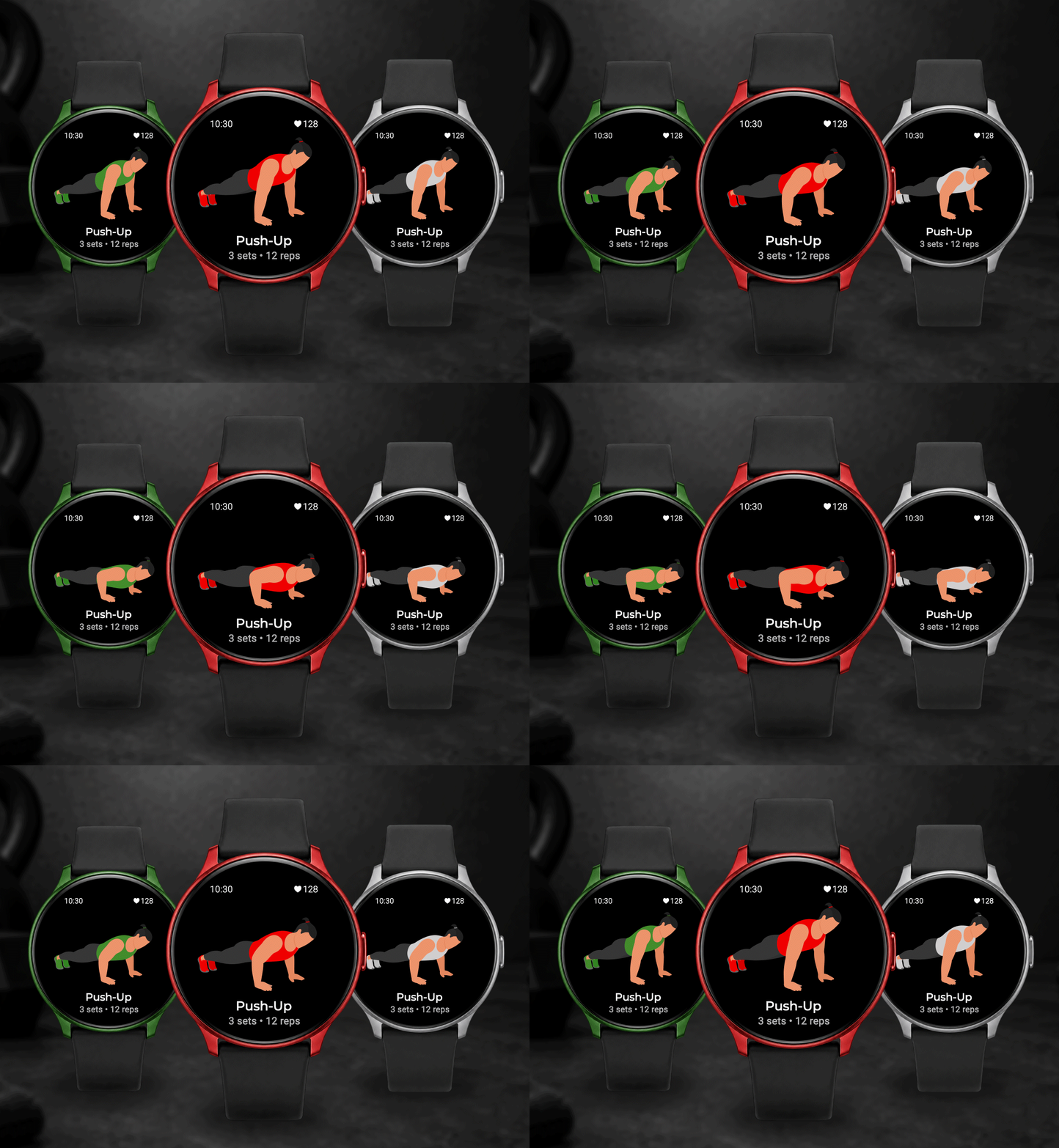
Why this matters
In hardware products, consistency is everything. Users don't separate device, interface, and content — they experience it as one system. Adaptive animation helps unify that experience.
From animation to product system
At this point, animation is no longer "visual support." It becomes a core part of the product.
Real-world direction
We're already seeing this shift: AI fitness mirrors, smart home trainers, compact workout devices, wearable guidance systems. All of them need lightweight visuals, real-time feedback, and seamless UI integration.
From concept to real product
Building this from scratch is not simple. It requires hundreds of exercises, consistent motion design, optimization for performance, and flexible rendering.
That's exactly why I built Vector Fitness Exercises — a library of 1500+ Lottie-based exercise animations, ready to integrate into apps and devices.
- Lottie-based vector animations (ultra-lightweight)
- Male and female variations
- Fully customizable colors for any brand
- Optimized for mobile, web, and wearables
- Structured and ready for integration
Explore how it works
Browse 1500+ exercise animations, filter by muscle group, and test how they fit your UI — with real-time color customization.
Browse 1500+ exercises →Final thought
As fitness products move into hardware, the requirements for UI change. Less space. Less tolerance for delay. Higher expectations.
Lottie is not just an option — it's a natural fit.